ENERGY EFFICIENCY Programs and Products
ENERGY STAR – RESIDENTIAL PROGRAMS AND PRODUCTS
ENERGY STAR is a voluntary program that helps businesses and individuals save money and protect the environment through superior energy efficiency. The program provides a trusted symbol for energy-efficient products and practices.
- Financial incentives – Many utility companies, state programs, and federal initiatives offer incentives for purchasing ENERGY STAR-certified products or implementing their recommended home improvements.
- Lower utility bills – ENERGY STAR-certified products use less energy than standard models.
- Better home comfort – ENERGY STAR-certified heating and cooling equipment and proper home sealing and insulation help maintain consistent temperatures throughout the home.
- Increased property value – Homes with ENERGY STAR-certified features and appliances often have higher resale values.
- Environmental protection – Choosing ENERGY STAR-certified products and following their recommended practices helps reduce emissions and air pollution.
THE ENERGY STAR HOME UPGRADE
This comprehensive approach recommends key energy improvements in the following six areas of a home where efficiency improvements can be made:
- Clean Heating and Cooling
- Super-Efficient Water Heater
- Smart Thermostat
- Well-insulated and Sealed Attic
- High Performing Windows and Storm Doors
- Electric Ready
Gradual implementation of these upgrades is recommended, choosing what works best for the home. With the energy grid becoming increasingly renewable, making these changes now helps save money immediately while preparing for a more sustainable energy future.
Home Performance with Energy Star is a partnership to connect homeowners with qualified contractors. See Appendix E for more details.
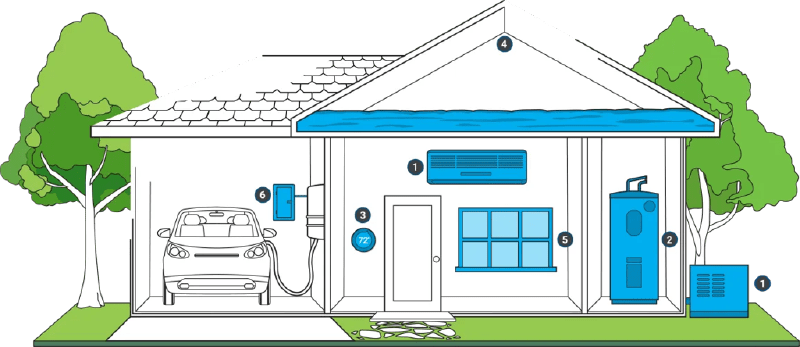
Source: https://www.energystar.gov/products/energy_star_home_upgrade
ENERGY STAR RESIDENTIAL PRODUCTS
Products earn the ENERGY STAR label by meeting strict energy-efficiency specifications. These standards are intended to help homeowners and renters save energy and money minimizing environmental impact.
Product Qualification:
- Products must meet strict energy efficiency criteria
- Independent third-party certification is required
- Regular testing and verification
- Most products must be 10-30% more efficient than standard models
- Annual review of specifications
Product Categories and Products
| Category | Eligible ENERGY STAR Products |
|---|---|
| Appliances | Air purifiers, clothes dryers, clothes washers, dehumidifiers, dishwashers, electric cooking products, freezers, refrigerators |
| Building Products | Residential windows, doors and skylights, seal and insulation, storm windows |
| Heating and Cooling | Air-source heat pumps, boilers, central air conditioner, ductless heating and cooling, furnaces, geothermal heat pumps, room air conditioner, smart thermostats, ventilation fans |
| Lighting | Ceiling fans, decorative light strings, light bulbs, light fixtures |
| Water Heaters | Heat pump water heaters, high efficiency gas storage water heaters, solar water heaters, whole house tankless gas water heaters |
| Other | Electric vehicle chargers, pool pumps, smart home energy management systems, water coolers |
https://www.energystar.gov/products
HOW TO READ THE ENERGY STAR LABEL
The ENERGY STAR label provides valuable information to help consumers make informed decisions:
ENERGY STAR Logo
The ENERGY STAR certification mark is used on products, homes, and buildings that have been verified to meet ENERGY STAR requirements
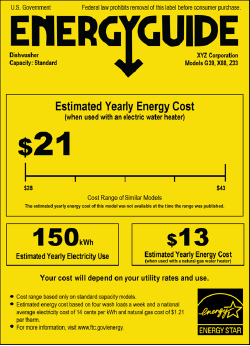
Energy Guide Label: Often accompanying the ENERGY STAR logo, this yellow label provides:
- Item Description (Dishwasher, Standard Capacity)
- Make and Model (XYZ Corp. Models G39, X88, Z33)
- Estimated yearly operating cost ($21 with electric hot water heater, $13 with natural gas water heater)
- Estimated yearly electricity consumption (150kWh)
- A scale showing energy consumption of similar models ($28-$43)
Product-Specific Information: Depending on the appliance, additional details may be included such as:
- Water usage for dishwashers and washing machines
- Capacity for refrigerators and freezers
- SEER (Seasonal Energy Efficiency Ratio) for air conditioners
QR Code: Some labels include a QR code that links to more detailed product information and comparisons.
By understanding the benefits of ENERGY STAR appliances, available incentives, and how to read the labels, consumers can make informed decisions that benefit their budget and the environment.
ENERGY STAR MANUFACTURER’S REBATES
Many major manufacturers offer rebate programs for ENERGY STAR-certified products. These rebates are for homeowners and renters purchasing weatherization or energy-efficiency products. There are no income limits.
To be claimed, rebates typically require:
- Proof of purchase.
- Model number verification.
- Installation documentation.
- Certification verification.
For certification documentation and verification, key resources are listed below. Current links can be found in Support Materials.
- ENERGY STAR Product Finder
- Air Conditioning, Heating, and Refrigeration Institute (AHRI)
- EPA’s ENERGY STAR Program RequirementsState-specific programs and additional resources can be found through:
- Database of State Incentives for Renewables & Efficiency (DSIRE)
- DOE’s Office of Energy Efficiency & Renewable Energy
- DOE Rebates