ENERGY EFFICIENCY Programs and Products
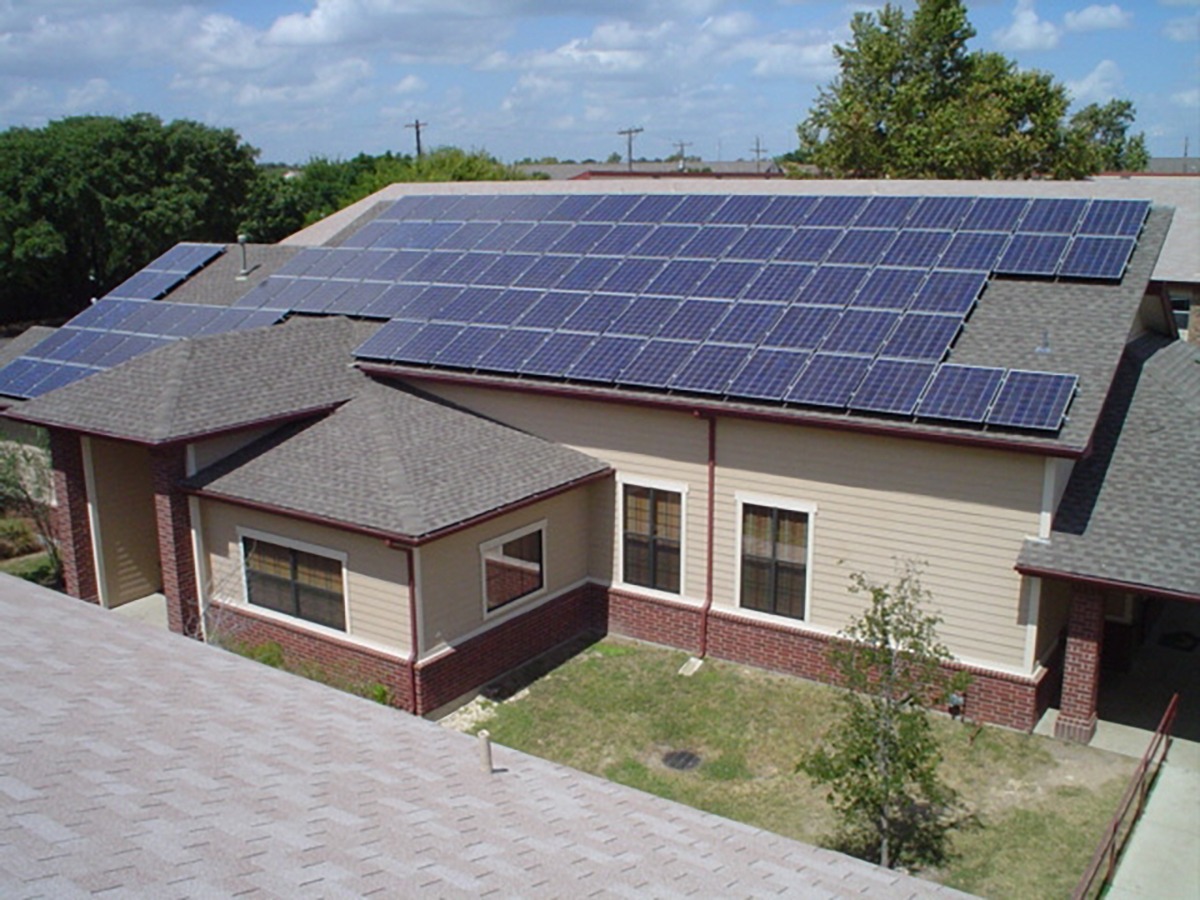
Solar panels, once a rare sight, have become mainstream, found atop millions of U.S. rooftops. Their surge in popularity stems from dual benefits: home sustainability and financial savings.
Over the decade to 2024, solar technology costs decreased dramatically while electricity prices have soared. This shifting economic landscape and various incentives have transformed solar into an attractive investment for many homeowners.
Is Residential Rooftop Solar Suitable for A Particular Property?
| Factor | Description | Impact on Suitability | Alternative |
|---|---|---|---|
| Climate | Solar panels work in all climates | Generally not a limiting factor | N/A |
| Roof Age and Condition | Old or damaged roofs may not be suitable | May require roof repair/replacement before solar installation | N/A |
| Shade | Excessive shade from trees reduces solar panel output | May make rooftop solar less efficient or impractical | Consider community solar or ground-mounted solar if space allows |
| Roof Size, Shape, and Slope | Ideal: South-facing, 15–40-degree slope, but other roofs may work | Affects efficiency and potential system size | Community solar or ground-mounted solar |
| Home Ownership | Required for rooftop solar installation | Renters or those with unsuitable roofs cannot install their own panels | Community solar |
Rooftop Solar Net Metering
Net metering is a policy that allows rooftop solar panel owners to:
- Export excess electricity to the power grid.
- Receive credit for this exported electricity on their utility bills.
- Use these credits to offset electricity consumption when their panels aren’t producing.
Remember:
- The price that utility providers pay to electric customers under ‘net metering’ arrangements varies.
- Net metering requires a bidirectional meter to measure the flow of electricity in two directions: consumption and excess that is exported.
- Net metering ensures fair compensation for all solar electricity produced.
- Credits apply to future electricity bills.
- Not all locations allow net-metering.
| Understanding Community Solar | |
|---|---|
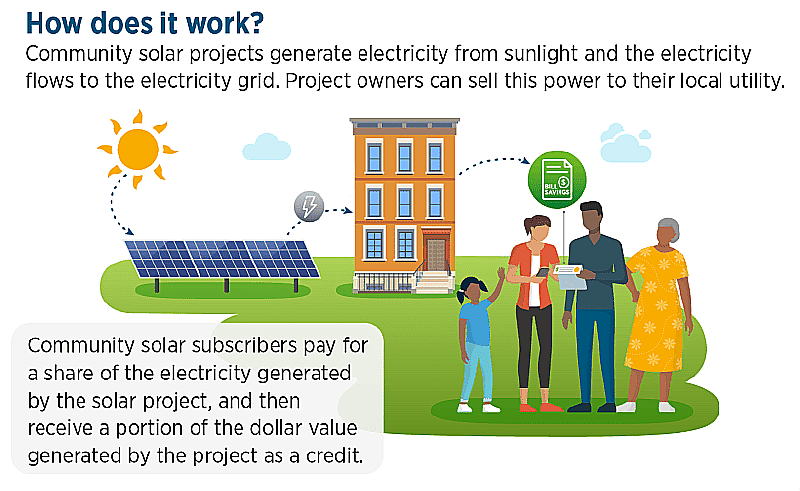
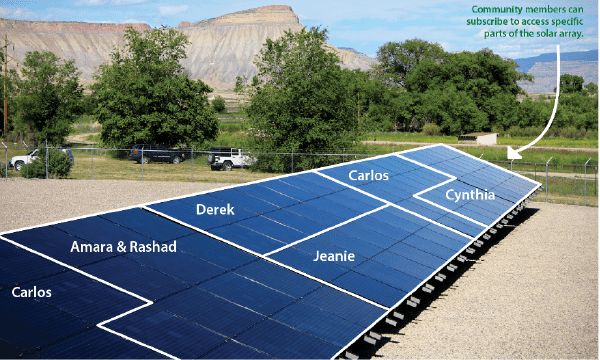
| What is Community Solar? | A shared solar power project where multiple households subscribe to a portion of a larger, centrally located solar array. Offers a flexible option for those unable to install their own panels. |
| How Does it Work? | 1. Shared solar array is built. 2. Participants subscribe to a portion of the array. 3. Energy generated is credited to their electricity bill, often at a lower rate than prevailing electricity prices. |
| Availability | Varies by state policies, utility offerings, and solar developer projects. More established programs exist in states like New York, Minnesota, Colorado, and Maryland. Massachusetts, |
| Eligibility | Typically, anyone paying an electric bill in the service area can participate. Some programs may have additional requirements. |
| Finding Programs | Resources include state/local programs, utility companies, online directories (i.e., DOE’s Community Solar Project Locator, EnergySage), nonprofits, and solar developers. |
| Steps to Sign Up | 1. Research available programs. 2. Evaluate options (cost, terms, savings). 3. Sign subscription agreement. 4. Monitor savings on utility bills. |
BENEFITS OF COMMUNITY SOLAR
Community solar programs offer many benefits that extend far beyond providing alternative energy. These programs are designed to create positive impacts across multiple fronts, from individual households to entire communities and the environment.
By participating in community solar initiatives, individuals and organizations can enjoy significant cost savings on their energy bills while contributing to local economic growth and increased grid resilience.
| Key Benefits | |
|---|---|
| Household Savings | Reduced electricity bills (target 20% reduction), particularly beneficial for low-income households |
| Economic Opportunities | Local job creation, improved grid resilience, and potential for community ownership of projects |
| Grid Resilience and Reliability | Increased reliability with battery storage, ability to deliver power during outages, faster power restoration, microgrid capabilities for continued operation during larger grid failures, supplementary resilience benefits when co-located with resilience hubs |
| Owning your Power Production | Enables households and communities without rooftop solar access to own their energy future, and opens the door to community ownership and decision-making in solar projects |
| Environment | Reduces reliance on traditional fuels, leading to decreased air pollution and emissions |